Intent - Reading curriculum aims
At RMS, we place reading at the heart of everything we do because is the foundation for all learning. Our reading curriculum develops our children’s ability to read fluently and understand what they are reading. Through reading in particular, our children have opportunities to develop culturally, emotionally, intellectually, socially and spiritually.
The National Curriculum for English (2014) aims to ensure that all pupils:
- Read easily, fluently and with good understanding
- Develop the habit of reading widely and often, for both pleasure and information
- Acquire a wide vocabulary, an understanding of grammar and knowledge of linguistic conventions for reading, writing and spoken language
- Appreciate our rich and varied literary heritage
We foster an appreciation and love of books and reading at every opportunity, including through:
- Sharing high-quality books with the children
- Weekly school library slots for each class
- Reading for pleasure opportunities in the school day
- Reading being a focal point in our ‘Learning Cycle’
- Author visits
- Celebrating World Book Day
- Investing in books and reading in our school

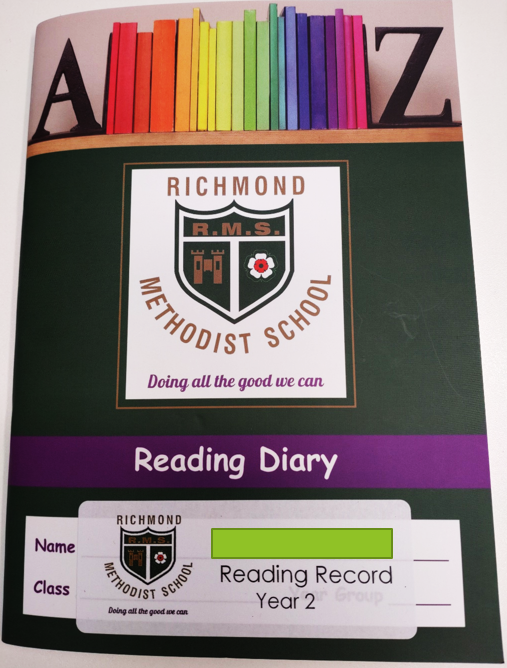
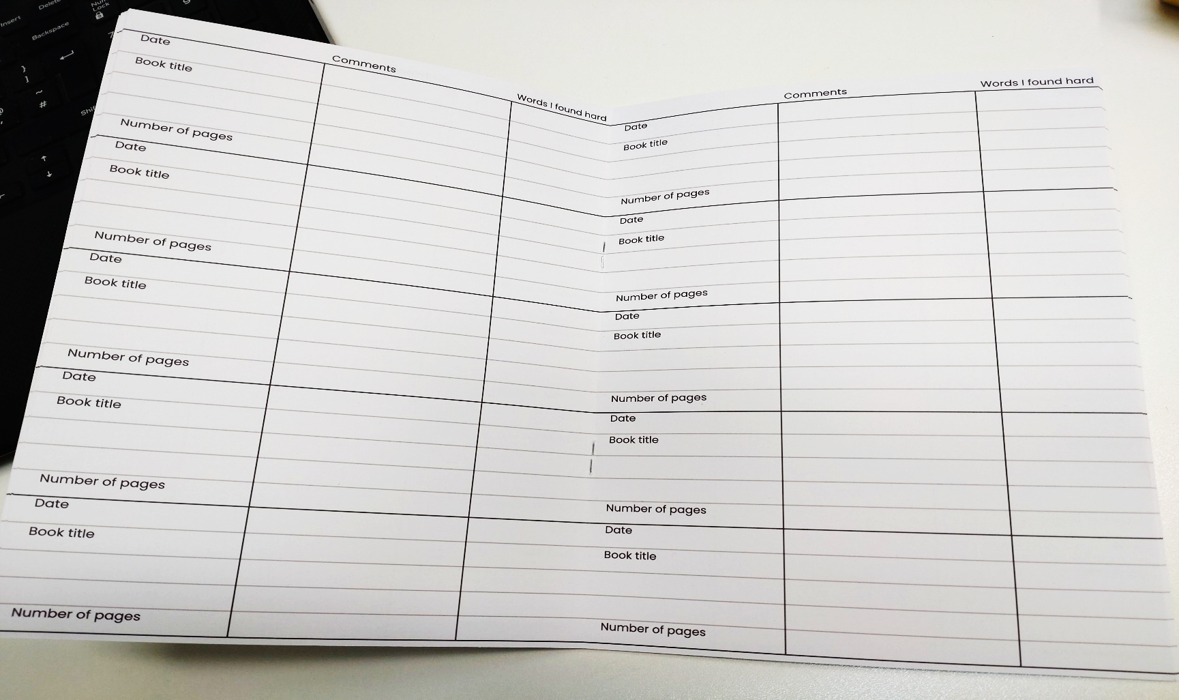
We encourage all children to read at home every day. We ask parents to record this in their child’s reading diary.
Implementation - How we teach reading
Reading in EYFS and KS1
At RMS , we believe that all our children can become fluent readers and writers. This is why we teach reading through Little Wandle Letters and Sounds Revised, which is a systematic and synthetic phonics programme. We start teaching phonics in Nursery/Reception and follow the Little Wandle Letters and Sounds Revised progression, which ensures children build on their growing knowledge of the alphabetic code, mastering phonics to read and spell as they move through school.
As a result, all our children are able to tackle any unfamiliar words as they read. At RMS, we also model the application of the alphabetic code through phonics in shared reading and writing, both inside and outside of the phonics lesson and across the curriculum. We have a strong focus on language development for our children because we know that speaking and listening are crucial skills for reading and writing in all subjects.
Daily phonics lessons in Reception and Year 1
- We teach phonics for 30 minutes a day. In Reception, we build from 10-minute lessons, with additional daily oral blending games, to the full-length lesson as quickly as possible. Each Friday, we review the week’s teaching to help children become fluent readers.
- Children make a strong start in Reception: teaching begins in Week 2 of the Autumn term.
- We follow the Little Wandle Letters and Sounds Revised expectations of progress:
- Children in Reception are taught to read and spell words using Phase 2 and 3 GPCs, and words with adjacent consonants (Phase 4) with fluency and accuracy.
- Children in Year 1 review Phases 3 and 4 and are taught to read and spell words using Phase 5 GPCs with fluency and accuracy.
Daily Keep-up lessons ensure every child learns to read
- Any child who needs additional practice has daily Keep-up support, taught by a fully trained adult. Keep-up lessons match the structure of class teaching, and use the same procedures, resources and mantras, but in smaller steps with more repetition, so that every child secures their learning.
- We timetable daily phonics lessons for any child in Year 2 and above who is not fully fluent at reading or has not passed the Phonics screening check. These children urgently need to catch up, so the gap between themselves and their peers does not widen. We use the Rapid Catch-up assessments to identify the gaps in their phonic knowledge and teach to these using the Rapid Catch-up resources – at pace.
- These short, sharp lessons last 15-20 minutes daily and have been designed to ensure children quickly catch up to age-related expectations in reading.
Our Reception, Year 1 and Year 2 children receive daily phonics lessons and take part in three reading practice sessions per week. The book they are reading is accurately matched to their current phonics knowledge.
The reading practice sessions have been designed to focus on three key reading skills:

- decoding = phonics
- prosody = reading with meaning, stress and intonation
- comprehension = understanding the text
After the third reading practice session, the child can read 95% of the words. It then goes home to be read for fluency practice.
Supporting children in their journey to becoming a reader is one of the most important things we can all do. Ensuring that children become fluent, active readers allows them to make sense of the world around them, enables them to acquire new knowledge and encourages their imaginations to flourish! Reading is the key that unlocks the world of learning and that is why it is at the heart of everything we do here at RMS.
To replace our current reading scheme, we are excited to launch our exclusive
RMS Reading Rivers!
Each year group, from Reception to Year 6, has a selection of six high-quality books per half term to take home and enjoy. The aim is to read as many of the six books as they can.
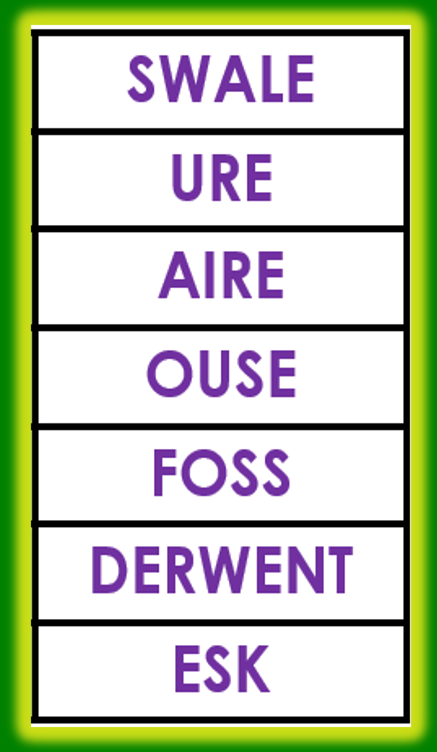
Here is Swale’s Reading River for this half term, as an example:
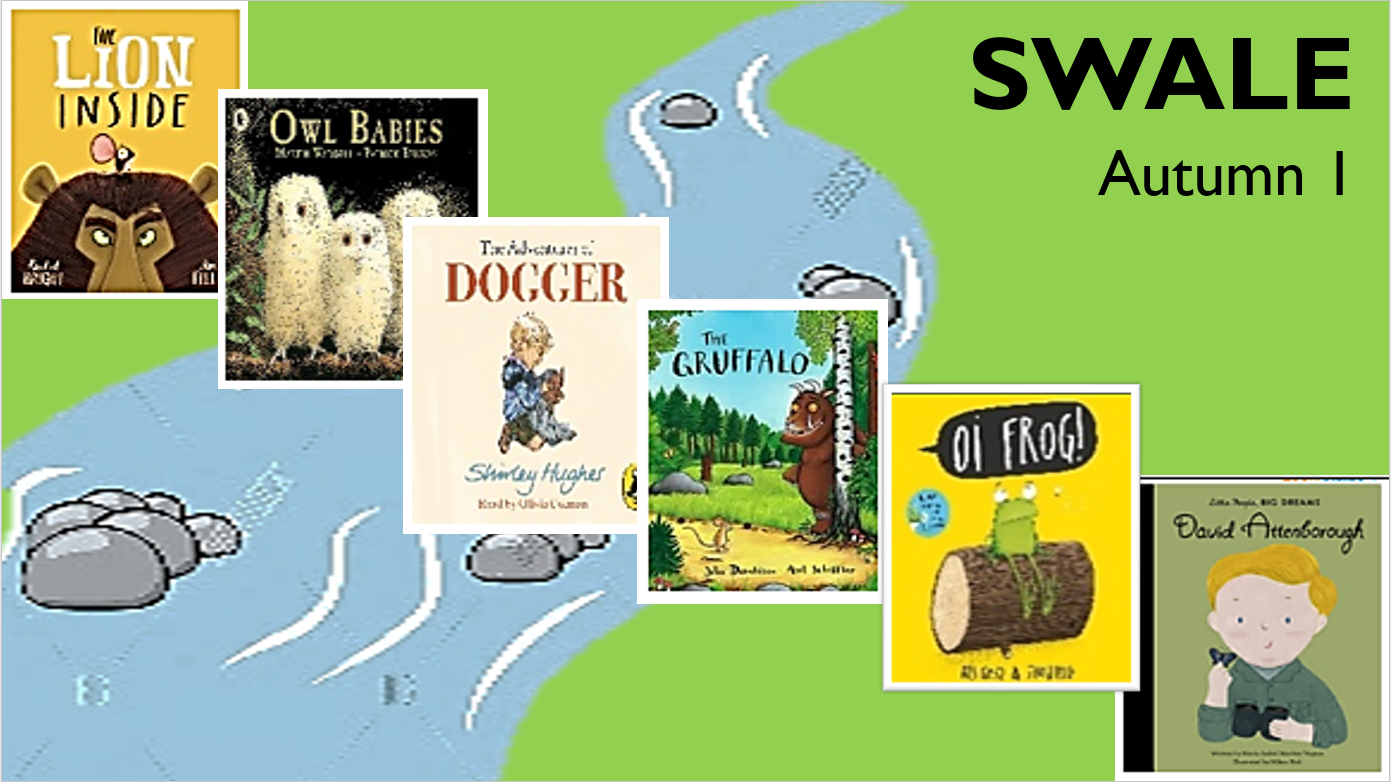
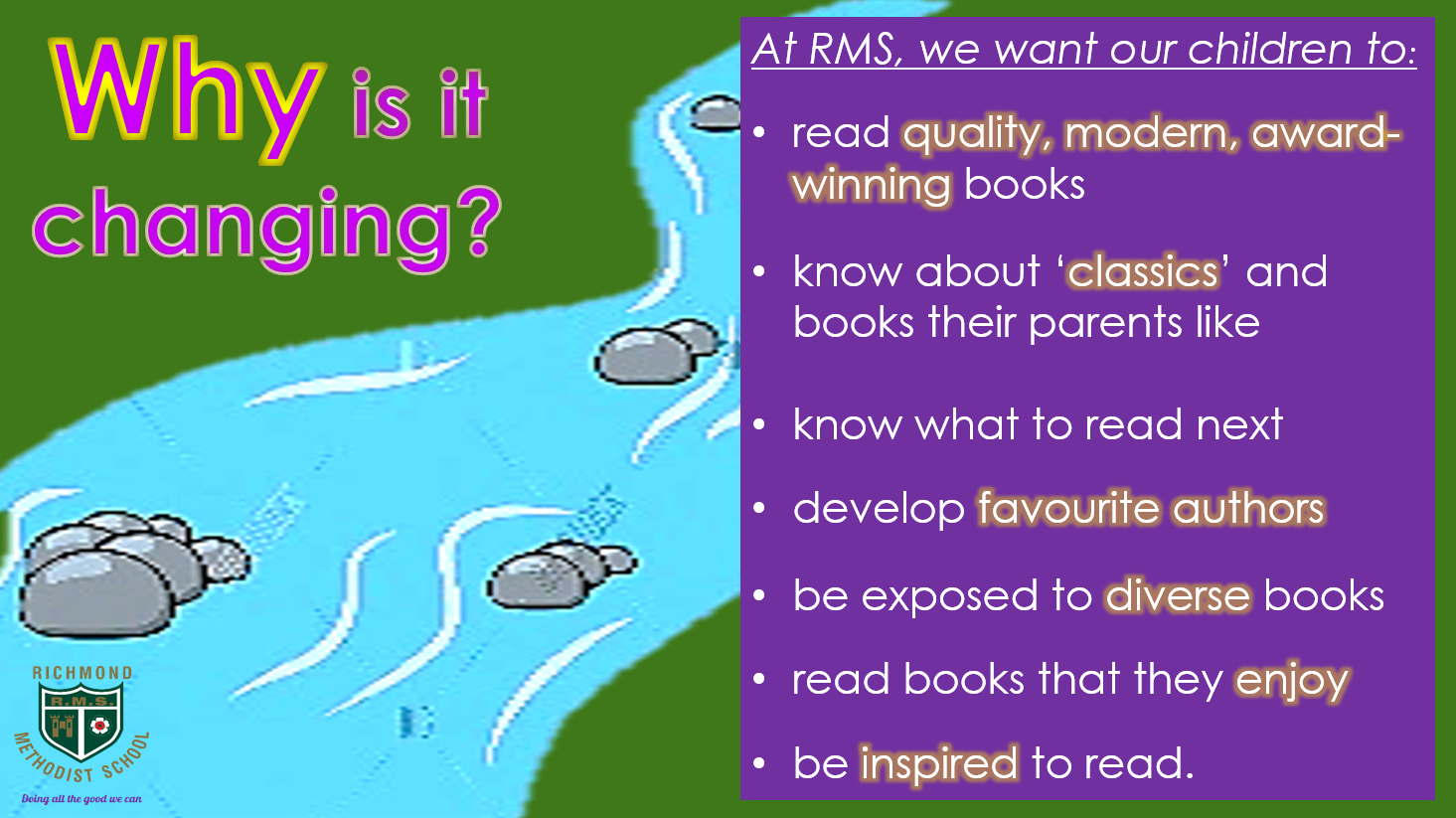
Each half term, six new books are on offer. We have collated some fantastic titles, carefully chosen for their diversity of characters, themes and authors. We have listened to parents, staff and pupil suggestions and have also included best-sellers, prize-winners and classics.
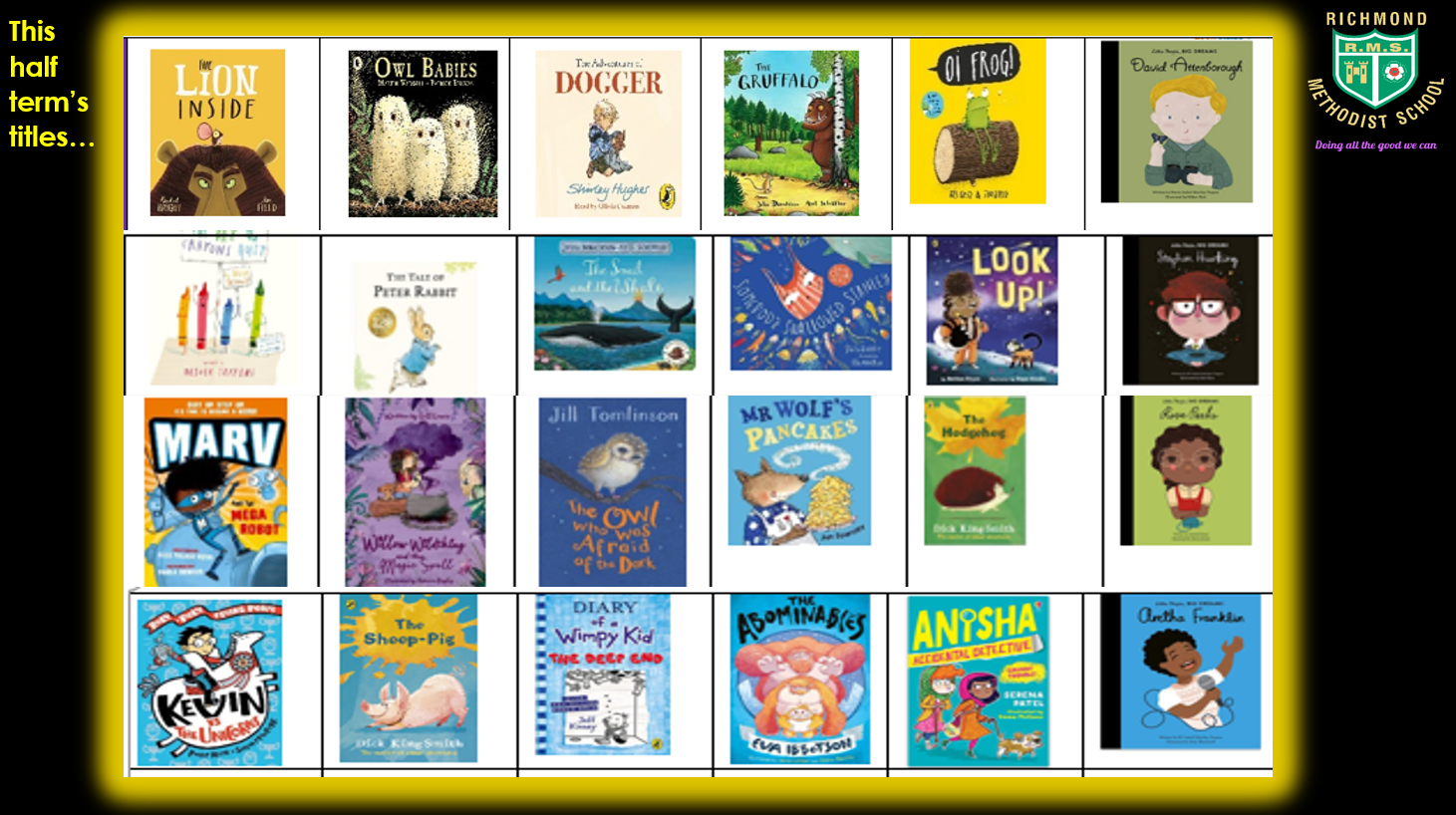
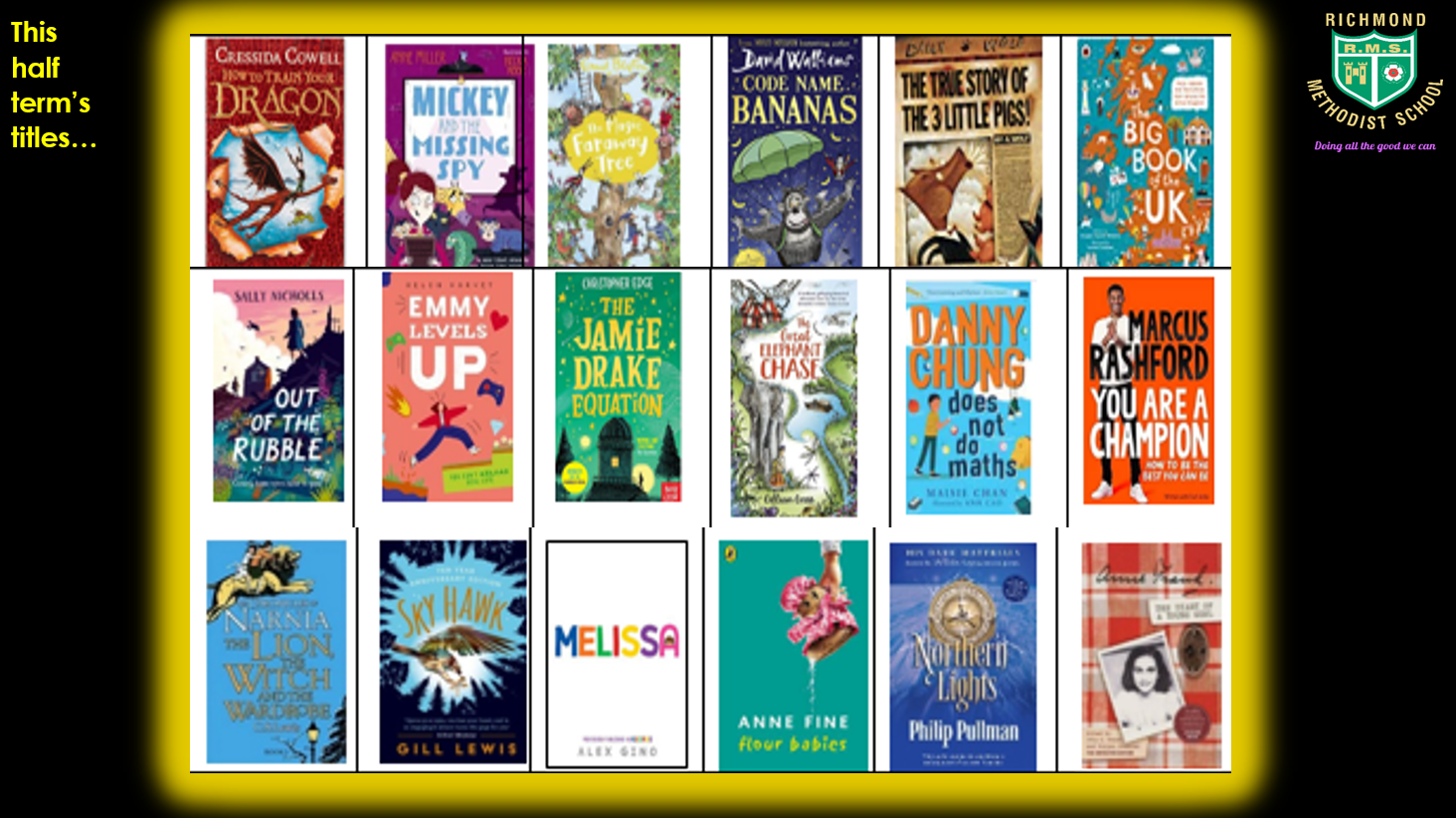
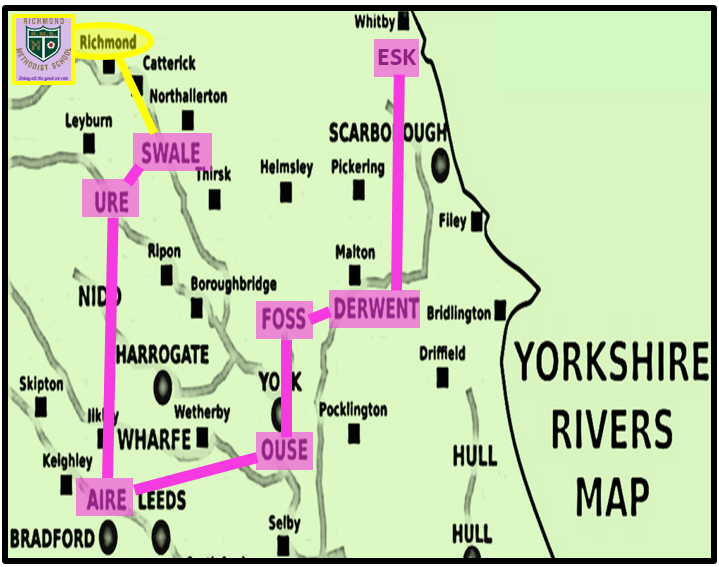
Each Reading River has been named after a river in the Yorkshire area, starting with ‘Swale’ right here in Richmond for Reception and ending with ‘Esk’ near Whitby for the Year 6s.
If your child is learning to read and has a Little Wandle phonics book, they will continue to bring the phonics book home to practise each week.
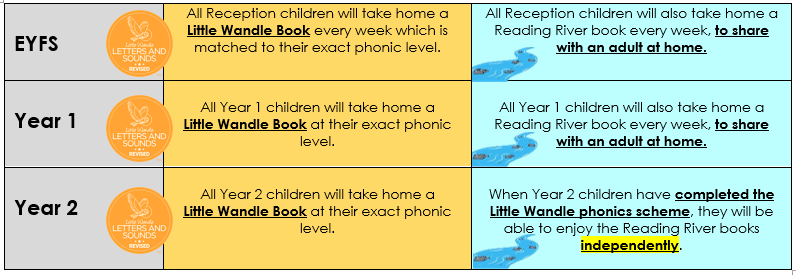
Their Reading River book is simply their ‘reading for pleasure’ book. If they cannot yet read it themselves, please read, share and explore the Reading River book with your child. For all other children, the Reading River book is their weekly reading book to read to an adult at home every day and enjoy!
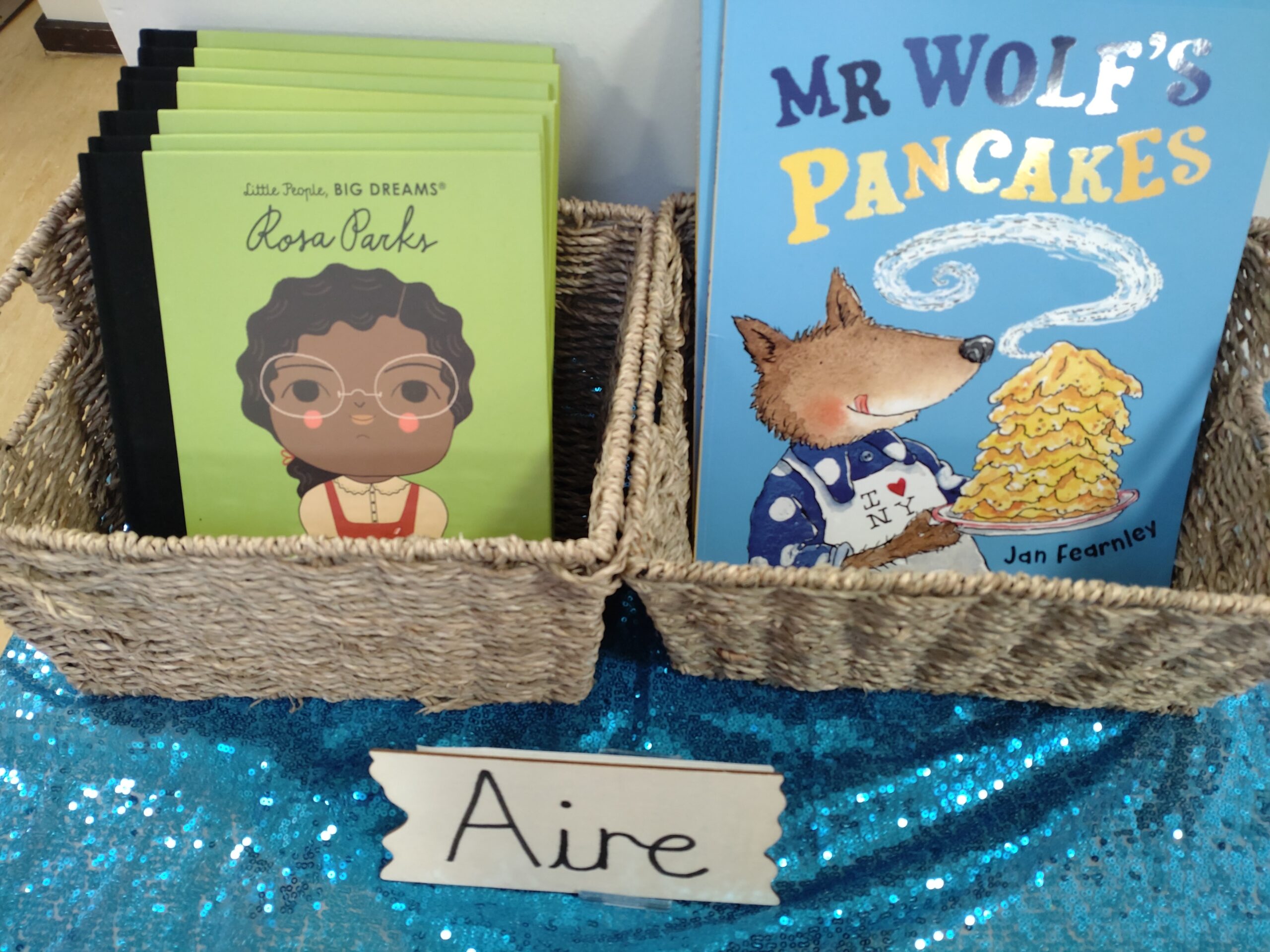
Lots of our brand new books have already started arriving!
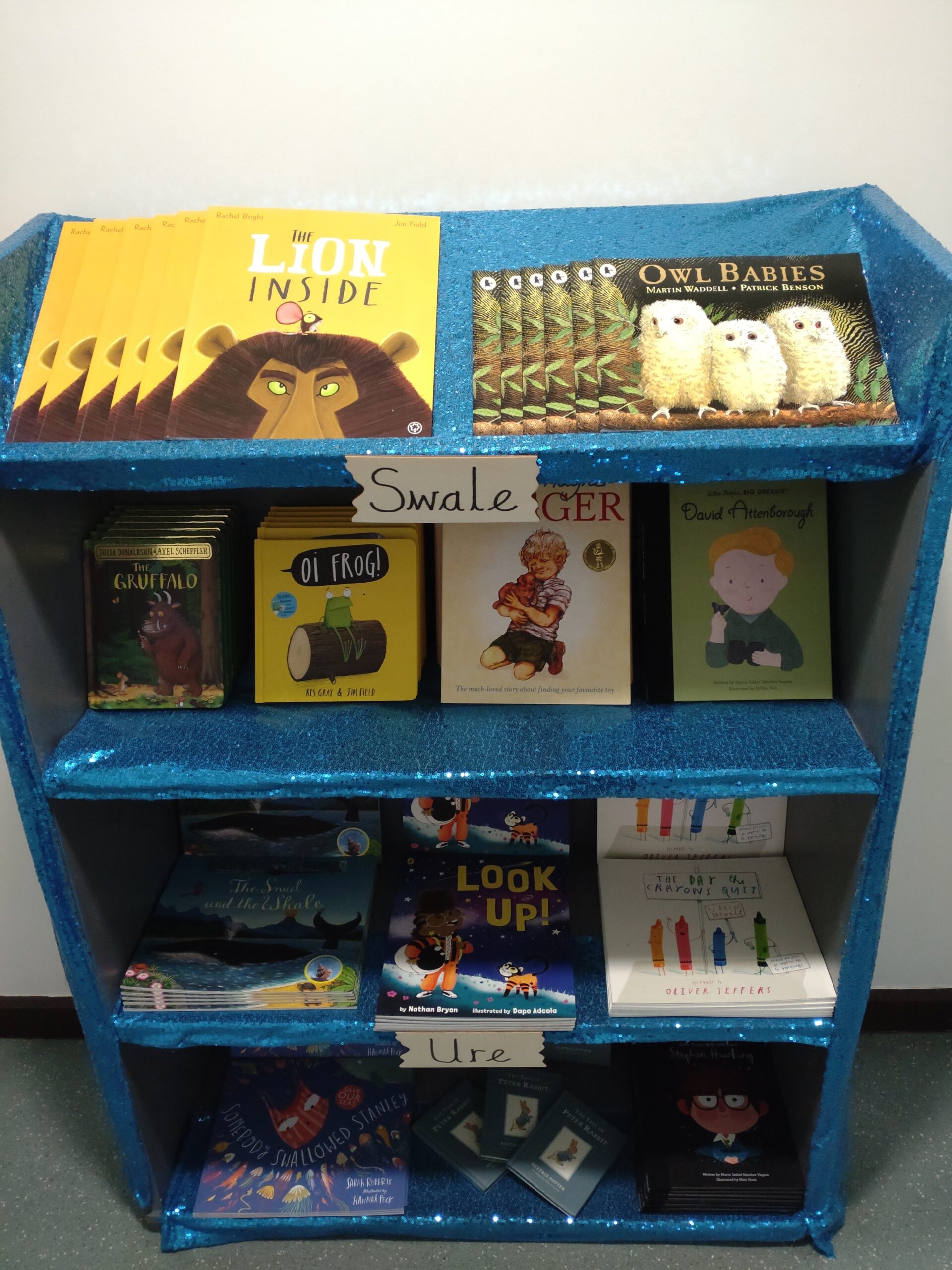
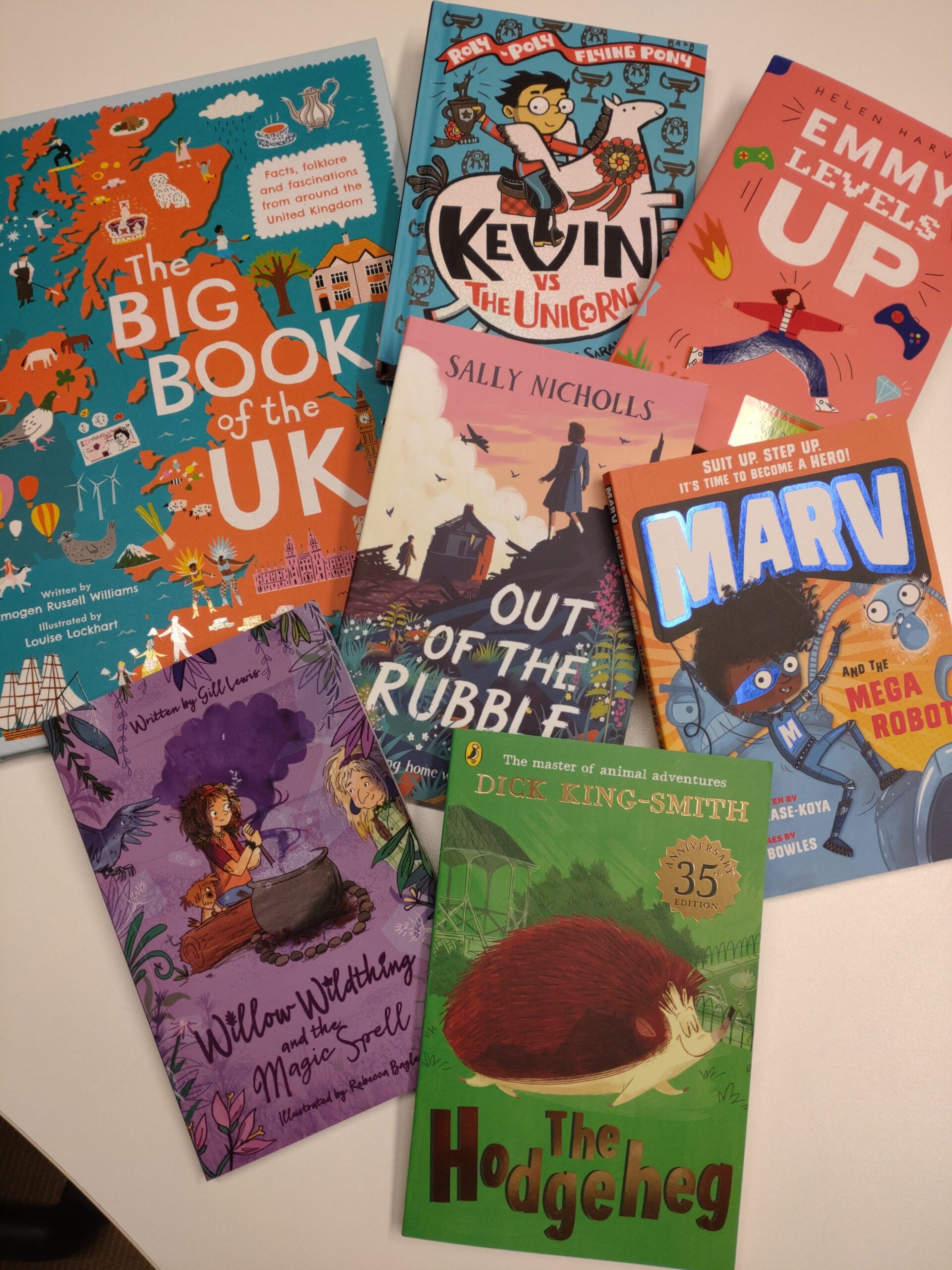
The children will be able to begin their journey down the Reading Rivers very soon!
Reading in KS2:
In KS2, we teach reading through a whole-class guided reading approach, which consists of:
- Three 20-minute whole-class guided reading sessions (teacher and children read class book and discuss, question and develop skills)
- One 20-minute discrete comprehension per week
- Daily reading for pleasure sessions (children enjoy reading and teachers hear individual readers)
Reading continues to be developed to include higher order reading skills, where greater emphasis is placed on inference and deduction. Reading for understanding, skimming, scanning, summarising, making references or supporting a view are all important features of KS2 reading.
Impact – How does our children’s reading knowledge develop?
Our children progress from decoding to reading with automaticity and comprehension. Children in Year 6 read widely and often, for both pleasure and information.
Our lowest 20% of readers across the school become more fluent and not only progress academically but their confidence increases and attitude towards books and reading becomes a positive one.